Engineering
Industrial design, embedded engineering, computer vision, production and field delivery under one roof in Bengaluru — under a licence that lets us change the product for a single city.
EmQos is not a system integrator and not a reseller. We build and supply under licence, we do the engineering on the product itself, we build the equipment, and we carry the support. That is a structural position rather than a marketing one, and its consequences show up in every part of a programme.
Kerbside equipment fails in ways that laboratory specifications do not predict. It is stood on, driven over, flooded, sand-blasted, cooked, vandalised, and cleaned with a pressure washer by someone who has never read the manual. It has to survive on the power a small solar panel can gather under a tree, in a monsoon week, at a latitude the designer never visited. And it has to be serviceable by a technician on a live street, in traffic, in twenty minutes.
So our housings are sealed and cage-shielded, our access is behind an electronic lock wedge rather than a screw a passer-by can turn, our mounting systems are designed around kerb faces that are broken, low, or not there at all, and our units sit above grade so that resurfacing does not destroy the estate. Every one of those decisions came from a failure we watched happen somewhere.
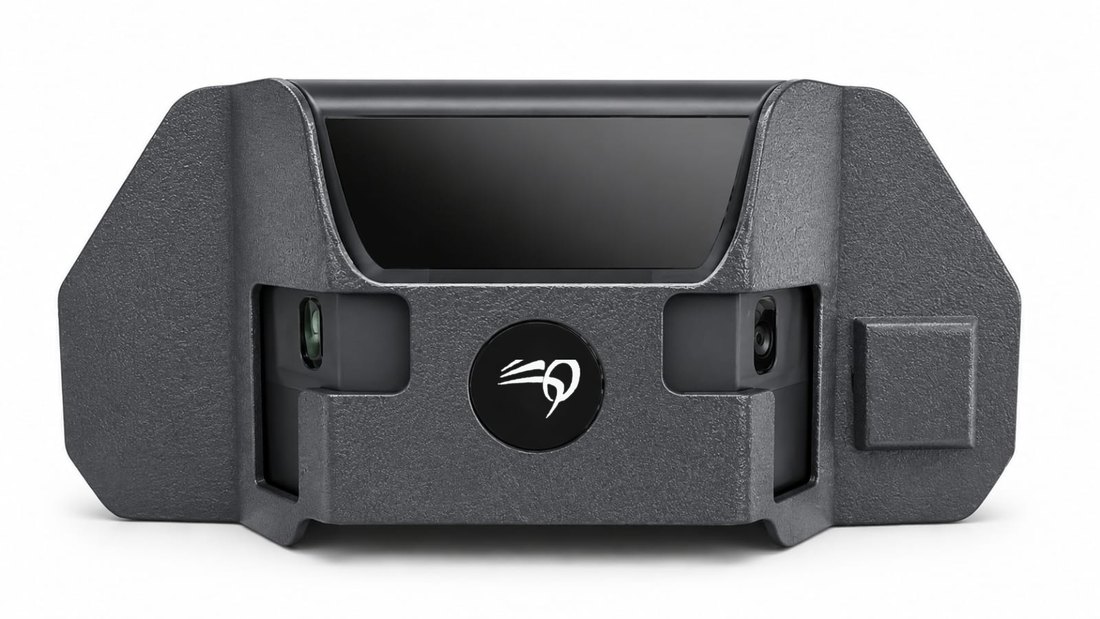
Recognition accuracy is not a single number. It is a number for a particular plate format, a particular plate style, a particular set of lighting conditions and a particular mounting geometry. A model trained on European plates in temperate light does not transfer to a Gulf plate in July glare or an Indian plate behind a bumper guard, and no amount of specification language changes that.
We therefore retrain on the estate’s own data, in the jurisdiction, for the jurisdiction — plate formats, plate styles, local lighting and the operating conditions of that specific city. Improvements reach the field as routine over-the-air updates rather than as a procurement. Where the contract or the regulation requires model development to happen in country, we do it in country.
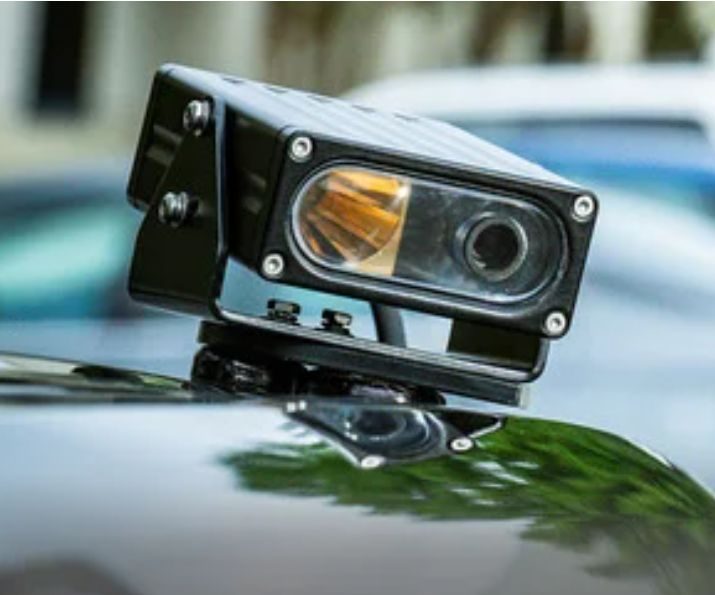
Mechanical design, electronics, firmware, model training, production engineering and field support sit in the same organisation in Bengaluru. A field failure becomes a design review without a supplier in between; a design change becomes a production change without a negotiation. That is what lets us commit to changing the product for one city rather than telling it to wait for a release that serves everybody.
It is also what makes localisation tractable. A new plate format, a new bay class, a script that does not lay out the way the interface was designed for, a payment rail that is dominant in one country and absent in the next — each of those is an ordinary piece of work here, not an exception that has to be escalated.

Delivery
A kerbside estate is only as good as the survey it was specified from and the commissioning that proved it works. We treat both as engineering disciplines, not as mobilisation overhead.
A full as-built bay survey producing a GIS layer and digital twin the authority owns, with per-bay attributes, movement and circulation, terrain and drainage, utilities and power, and a condition report. The form factor on each run of kerb is chosen from that survey, not from a catalogue.
Zone-by-zone installation, signage and marking installed and accepted before live issuance, device-by-device commissioning, and accuracy verification against ground truth rather than against the datasheet.
Remote diagnostics and over-the-air firmware and model updates, preventive maintenance and re-marking cycles driven from the survey database, and a quarterly review at which instruments are re-weighted against what the estate actually did.
Depth
EmQos builds and supplies under licence from CivicSmart, Inc., and does the engineering, production and support itself. The engineering is ours; so is the accountability.
Our licence is not a reseller appointment, a distribution agreement, or a supply arrangement of the kind that can be withdrawn, re-priced or re-assigned to a competitor part-way through a concession. It is durable, and it carries the right to modify the product. For an authority weighing a 15- to 30-year commitment, that is the distinction that matters.
The practical consequence is the only part an evaluator needs to hold on to. When a city needs the product to do something it does not do today — a new bay class, a different grace rule, an extra language on a notice, a maximum-stay pattern nobody has asked for before — the change is made here, by us, on our own roadmap. There is no third party whose priorities have to be persuaded.
When a city needs the product to do something it does not do today, we change the product.
CivicSmart acquired Duncan Parking Technologies — among the oldest established names in municipal parking equipment in North America, and the origin of the mass-produced kerbside meter. Behind the current generation stand roughly nine decades of continuous kerbside practice:
Each generation was built to fit what the previous one left in the ground. That is the habit of mind a city is buying into: equipment designed to be replaced by its successor without replacing the street around it.
Track record
The platform and the technology base behind it have been deployed and operated across municipal programmes in North America, Australia, the Gulf, Africa and South Asia — on-street estates, municipal and institutional lots, and full enforcement ecosystems. The equipment and interface imagery on this site is drawn from that body of work.
On-street and off-street municipal parking schemes, including deployments at Nashik and Bhopal.
Automated on-street parking for Muscat Municipality at Al Khuwair and Al Ghubrah — technology, integrations and operations delivered by EmQos. Artificial-intelligence model development for the Sultanate is performed in country by Smart Curb Technologies LLC, an Omani company owned by EmQos.
Municipal on-street parking and enforcement programmes delivered as technology subcontractor under a prime contract, covering enforcement handhelds, ANPR, the PEMS platform, agency integrations, field commissioning, training and support.
The single most important credential we have is a structural one, and it is worth restating plainly. Every element of the system we supply is engineered and built by us rather than integrated from other companies’ products, so an authority has one accountable party for the device, the model, the platform and the street. There is no supplier chain standing between a requirement and the ability to meet it — and no point in a programme at which the answer to a reasonable request is that somebody else would have to agree.
We are happy to take technical questions from your engineers rather than your procurement team — power budgets, radio design, accuracy verification methodology, whatever matters.
